


Pest activity in a food business rarely starts with something dramatic. More often, it begins with small signs: a few droppings behind a fridge, gnawing near a bin store, cockroach activity around warm equipment, or wasps gathering near outdoor seating and waste areas.
For restaurants, cafés, pubs, takeaways and commercial kitchens across Kent, spotting those early signs matters. It helps protect customers, staff, stock, your reputation and your food hygiene standards. The Food Standards Agency’s Safer Food Better Business guidance says effective pest control is essential for keeping pests out of food premises and preventing harmful bacteria from spreading.
If you already have signs of pests in your premises, Protego Pest Control can help with commercial pest control in Kent, cockroach control in Kent and planned pest control contracts.
Why food businesses in Kent need to act early
A pest issue in a food premises is not just an inconvenience. It can affect food safety, staff confidence, customer trust, online reviews, inspections and the day-to-day running of the business.
This guide covers the warning signs to watch for. If you already have activity on site, or you want the visits and records an environmental health officer will ask to see, our pest control for restaurants and takeaways in Kent page explains how that works.
Restaurants and takeaways are naturally more exposed than many other premises because they have the exact things pests are looking for: warmth, food residues, water, shelter, waste storage and frequent deliveries. Kent’s mix of town-centre high streets, older commercial buildings, rural pubs, coastal food outlets and busy takeaway units can make pest pressure very different from one site to the next.
A takeaway in Maidstone with a shared rear alley may have a different risk profile from a restaurant in Sevenoaks with outside seating, a café in Tunbridge Wells with a basement store, or a pub kitchen near rural fields and outbuildings. The key is not to wait until pests are seen by customers. The signs usually appear behind the scenes first.
The main areas to check regularly
The Food Standards Agency advises food businesses to check their premises regularly for signs of pests and to keep premises in good repair to reduce contamination risk. For restaurants and takeaways, the highest-risk areas are usually the places staff walk past every day without looking closely.
Bin stores and external waste areas
Bin stores are one of the biggest pressure points for Kent food businesses. Rats, mice, flies and wasps are all attracted to food waste, spillages and poorly managed refuse.
Watch for:
- Pest control for restaurants and takeaways in Kent
- gnaw marks on bin lids or plastic sacks
- droppings around bins, walls or fence lines
- holes or burrows near the base of walls, sheds or boundaries
- food debris under bins
- liquid waste or grease around the floor
- wasps gathering around sugary waste or drink containers
- bins left open after busy service periods
If your bin store backs onto an alley, shared yard, car park or neighbouring food premises, the risk can be higher because pests may be moving between multiple sites.
Back doors, delivery doors and thresholds
Food businesses often have rear access doors open during deliveries, cleaning, staff breaks or hot kitchen shifts. Even short periods can create opportunities.
Check for:
- gaps under external doors
- damaged door brushes or seals
- light visible beneath closed doors
- food debris around thresholds
- rodent smear marks along wall-floor junctions
- fly activity around open doors
- deliveries left outside for too long
A door gap that seems small to staff can still be enough to create a recurring pest route. If the same area keeps showing signs, pest proofing may be worth considering alongside treatment.
Dry stores and stock rooms
Dry stores are attractive because stock can sit undisturbed. Rodents, cockroaches and stored-product insects can all become established if stock rotation and inspection are weak.
Look for:
- torn packaging
- gnawing on cardboard or sacks
- droppings on shelving
- unusual smells
- dead insects in corners or light fittings
- webbing or larvae in dry goods
- stock pushed tightly against walls
- gaps around pipework or service entries
Good stock rotation helps, but it does not replace inspection. Shelves, corners and floor-wall edges need regular checking, especially in older Kent premises where service routes and voids may be harder to monitor.
Cockroach signs in restaurants and takeaways
Cockroaches are one of the most serious pests for food-led premises because they favour warm, hidden areas close to food, moisture and equipment. In restaurants and takeaways, they are often found around kitchens, staff areas, boiler cupboards, plant rooms, service voids, dishwashing zones and behind appliances.
Early signs can include:
- live insects seen at night
- small dark droppings in cupboards or corners
- egg cases near hidden harbourage
- a stale or oily smell
- activity around fridges, cookers, dishwashers or sinks
- insects seen when equipment is moved
- complaints from staff about “beetles” or “small bugs” in warm areas
Cockroach activity should never be brushed off as a one-off. By the time one is seen during opening hours, there may already be hidden activity elsewhere. For food businesses, a fast professional response through cockroach control in Kent is usually the sensible step.

Rodent signs around food premises
Rats and mice can affect restaurants and takeaways in different ways. Rats are often linked with external waste areas, drains, yards, gardens, alleys and bin stores. Mice are more likely to exploit small gaps and move into kitchens, store rooms, ceiling voids and wall cavities.
Watch for:
- droppings behind equipment, under shelving or near bins
- gnawed packaging
- scratching in ceilings or walls
- greasy smear marks along regular routes
- footprints or tail marks in dust
- burrows around external walls, fences or bin areas
- chewed cables, insulation or stock
- damaged air bricks, vents or service gaps
Food businesses should pay particular attention to the route between outside waste areas and inside storage or prep spaces. A rodent problem may not start in the kitchen, but that is often where the consequences become most serious.
For active rodent issues, see rat control in Kent or mouse control in Kent. If the issue keeps returning, a pest control survey can help identify why.
Wasps around outdoor seating, bins and entrances
Wasps are usually seasonal, but they can still cause real problems for restaurants, cafés, pubs and takeaways, especially where customers eat outdoors or where sugary food and drink waste builds up.
Common problem areas include:
- outdoor seating
- beer gardens
- bin stores
- bottle bins
- staff entrances
- rooflines and eaves
- wall cavities near customer areas
- waste areas with sugary residues
A few wasps around a bin in summer does not always mean there is a nest on site. Repeated flight in and out of one gap, roofline, wall cavity or shed is more concerning. If the nest is close to customers, staff routes or entrances, it should be dealt with professionally through wasp nest removal in Kent.
A practical takeaway pest control checklist
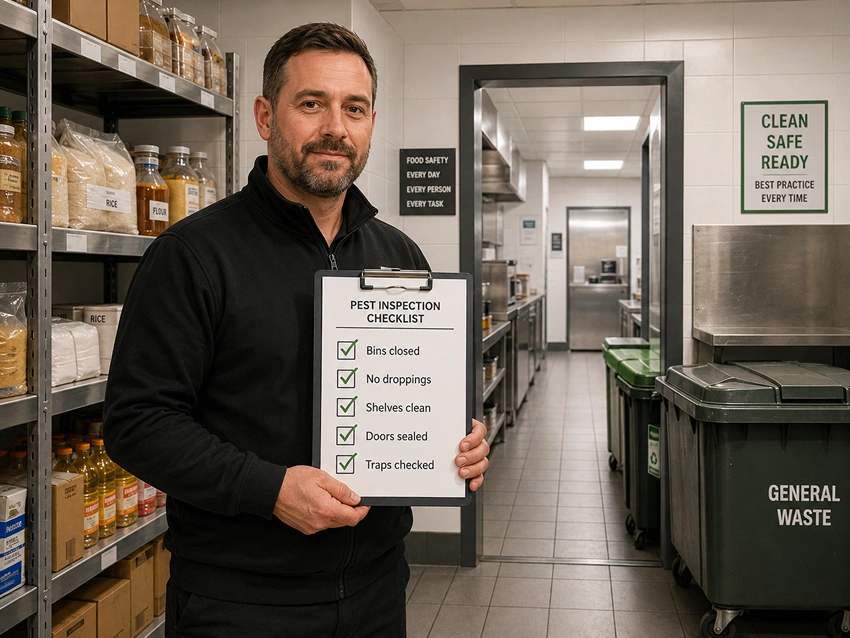
This checklist is useful for owners, managers and shift leaders. It is not a replacement for professional inspection, but it can help staff notice issues before they become bigger.
Daily checks
Check:
- bin lids are closed
- food waste is not left exposed
- floors are swept under prep counters where accessible
- no food debris is left around back doors
- doors close properly
- staff report any droppings, insects or gnaw marks
- spillages are cleaned quickly
- external waste areas are left tidy after service
Weekly checks
Check:
- dry store corners and shelving
- under and behind movable equipment
- gaps around pipework and service entries
- door seals and brushes
- bin store floors and wall edges
- stock rotation and damaged packaging
- signs of activity in staff rooms, toilets and corridors
- fly or wasp pressure near entrances and waste areas
Monthly checks
Check:
- roofline, vents and external proofing points
- drain covers and external gullies
- old stock or rarely moved items
- basement or loft storage areas
- neighbouring pressure points such as shared yards or alleys
- whether records, contractor notes and actions are up to date
The FSA’s Safer Food Better Business resources are designed to help small food businesses manage food safety procedures, including pest control as part of wider hygiene management.
Staff should know what to report
Pest control should not sit only with the owner or manager. Kitchen staff, delivery handlers, cleaners and front-of-house teams often see the first signs.
Staff should be encouraged to report:
- droppings, even if only one or two
- packaging damage
- unusual smells
- insects seen near warm equipment
- scratching sounds
- wasps repeatedly using one area
- gaps under doors
- food waste build-up
- sightings from customers or delivery drivers
The wording matters. Staff should feel they are helping prevent a bigger issue, not admitting failure. A calm reporting culture is much better than a hidden problem.
Why recurring issues usually need more than a one-off visit
Some pest problems are straightforward. Others keep returning because the cause has not been dealt with.
Recurring pest activity in restaurants and takeaways is often linked to:
- gaps under doors
- damaged vents or air bricks
- poor bin storage
- shared waste areas
- neighbouring premises
- cluttered stock rooms
- unsealed service penetrations
- warm equipment voids
- external rodent pressure
- lack of routine monitoring
This is where ongoing pest control contracts in Kent can be useful. A contract is not just about repeat visits. It can help create a routine for inspection, monitoring, recommendations and early intervention, especially for higher-risk food premises.
When to call a professional
A food business should get professional advice if there are clear signs of active pest activity, repeated sightings, unexplained droppings, cockroach evidence, rodent damage, wasps near customer areas, or recurring issues despite cleaning and proofing efforts.
You should also consider professional support if:
- the premises has shared rear access
- you have had previous pest issues
- staff are finding signs in more than one area
- the business is preparing for inspection or reopening
- you manage multiple sites
- the issue could affect food storage, prep or customer areas
Protego Pest Control provides commercial pest control across Kent for restaurants, takeaways, cafés, pubs and other food-led premises. We can also support businesses with cockroach control, rodent control, pest proofing, surveys and ongoing contracts.
Kent restaurant and takeaway premises we commonly help
Every site is different, but the same risk areas come up again and again across Kent food businesses:
- high street takeaways with shared rear yards
- restaurants with basement or cellar storage
- cafés with outdoor seating and food waste
- pubs with gardens, bottle bins and food prep areas
- commercial kitchens in older buildings
- food premises near rivers, fields or wooded areas
- units with adjoining neighbours or shared service routes
- premises with deliveries arriving through rear doors
From Tonbridge, Protego Pest Control covers businesses across Kent, including areas such as Maidstone, Sevenoaks, Tunbridge Wells, Ashford, Canterbury, Dartford, Medway and surrounding towns, subject to availability.
FAQs
What are the first signs of pests in a restaurant?
The first signs are often droppings, gnaw marks, damaged packaging, unusual smells, live insects near warm equipment, wasps around waste areas, or repeated activity around bin stores and back doors.
Are cockroaches common in takeaways?
Cockroaches can affect takeaways because they like warm, hidden areas with access to food and moisture. Kitchens, dishwashing areas, service voids and equipment gaps are common risk points.
Do restaurants need a pest control contract?
Not every premises needs the same arrangement, but many food businesses benefit from routine monitoring and documented visits. The right setup depends on the premises, risk level and whether issues are recurring.
What should staff do if they see a mouse or cockroach?
They should report it immediately, avoid disturbing the area unnecessarily, and make a note of where and when it was seen. Management should then arrange professional advice as soon as possible.
Are bin stores a major pest risk?
Yes. Bin stores can attract rodents, flies and wasps, especially if lids are left open, food waste spills onto the floor, or waste areas are shared with other premises.
Can wasps affect a restaurant even if there is no nest inside?
Yes. Wasps may be attracted to sugary waste, outdoor seating, drink spillages or bins. If they are repeatedly entering one gap or roofline, there may be a nearby nest.
What is the best way to prevent pests in a takeaway?
Good prevention combines cleaning, waste control, stock management, proofing, staff reporting and regular inspections. For higher-risk sites, planned commercial pest support is often the most reliable approach.
Need help with pest activity at a Kent food business?
If you run a restaurant, takeaway, café, pub or commercial kitchen and have noticed signs of pest activity, Protego Pest Control can help you take the next sensible step.
Call 07897314478, email info@protegopestcontrol.co.uk, or contact us for advice.
Useful links:


